JOURNAL
ON SHOKUNIN SPIRIT
Notes on the Shokunin spirit, the friction of craft, and letting go of optimization.
In many modern corporate worlds, speed is a virtue. We are trained to hunt for inefficiencies and to find the cleanest path from point A to point B.
But craft resists this logic.
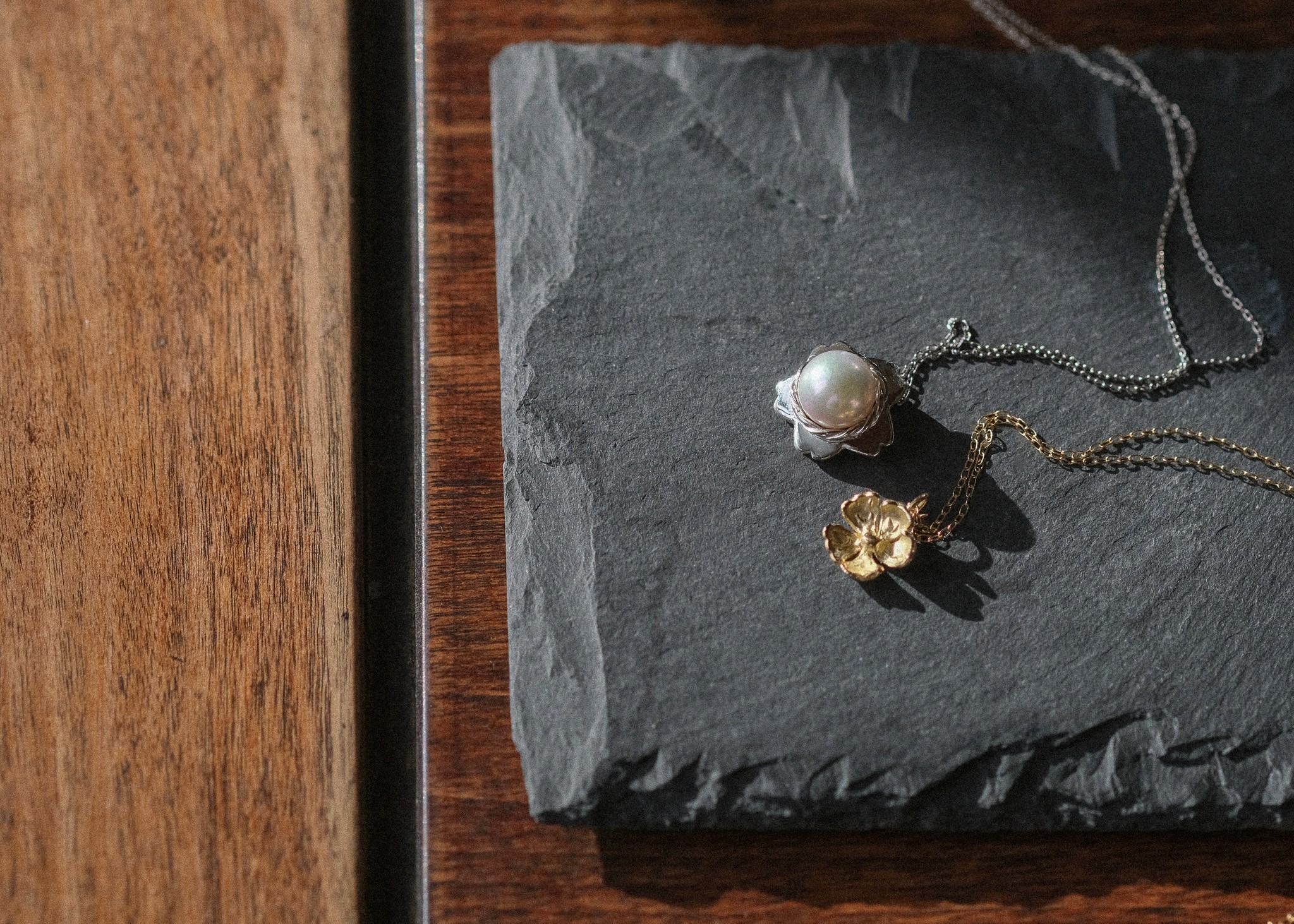
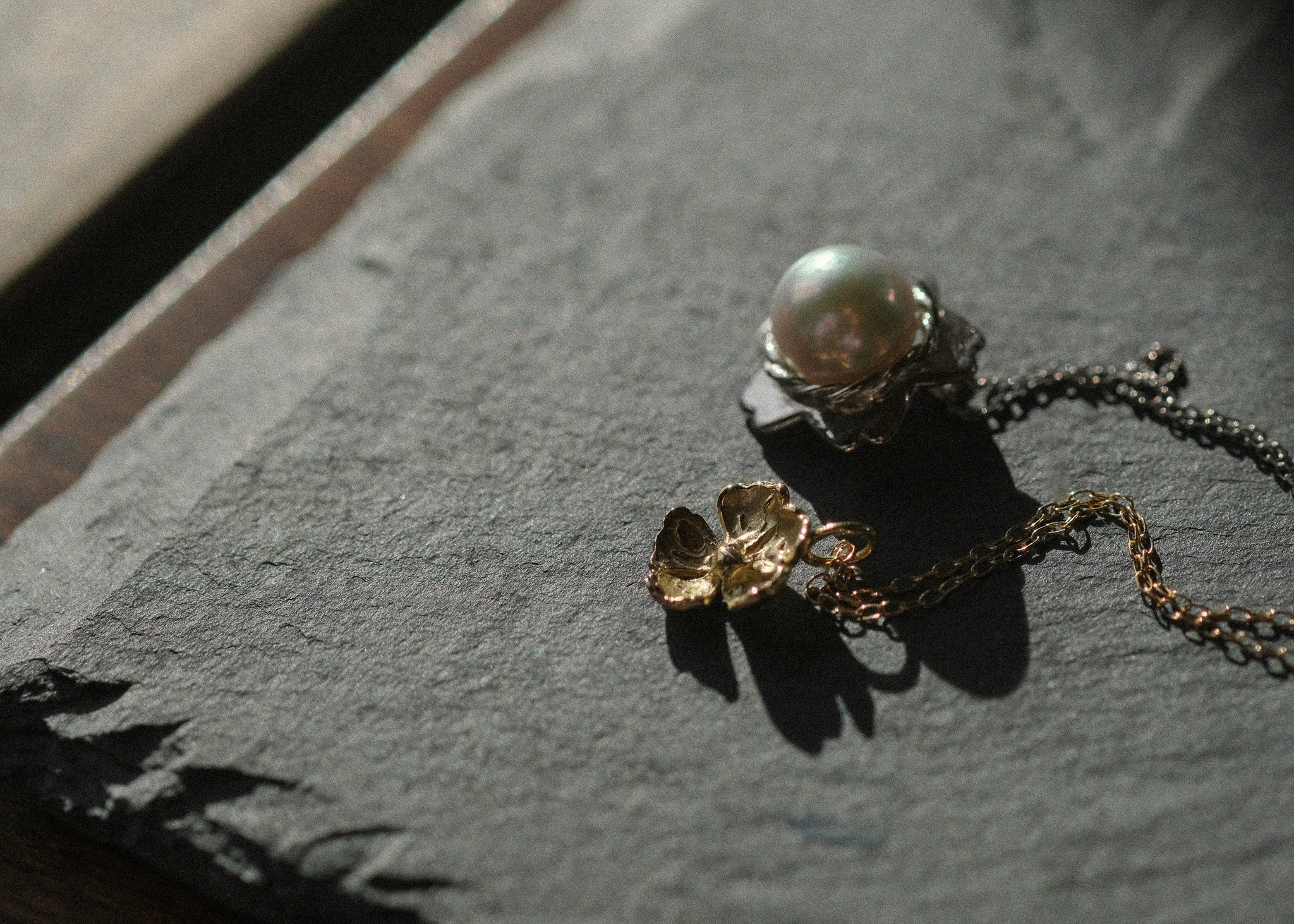
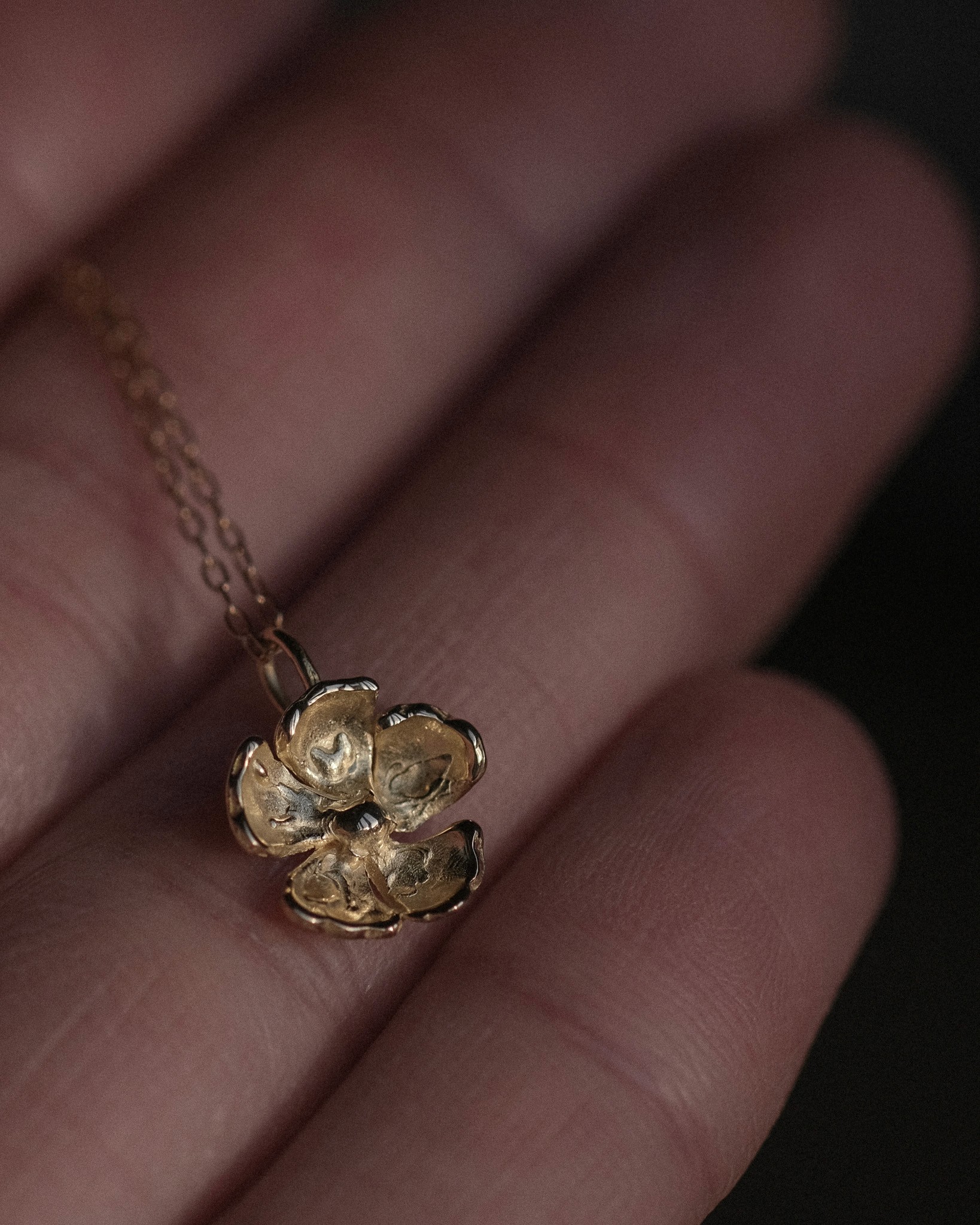
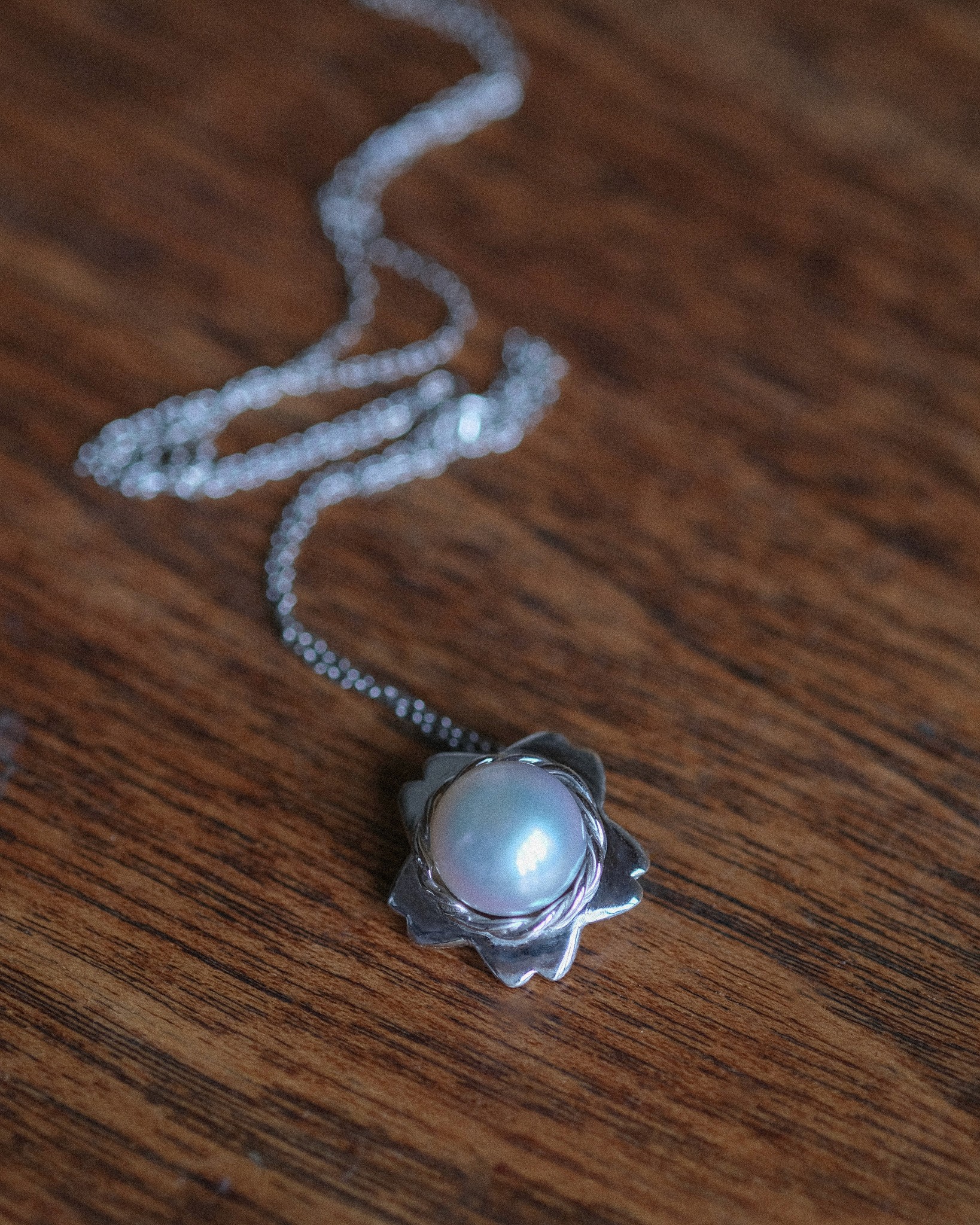
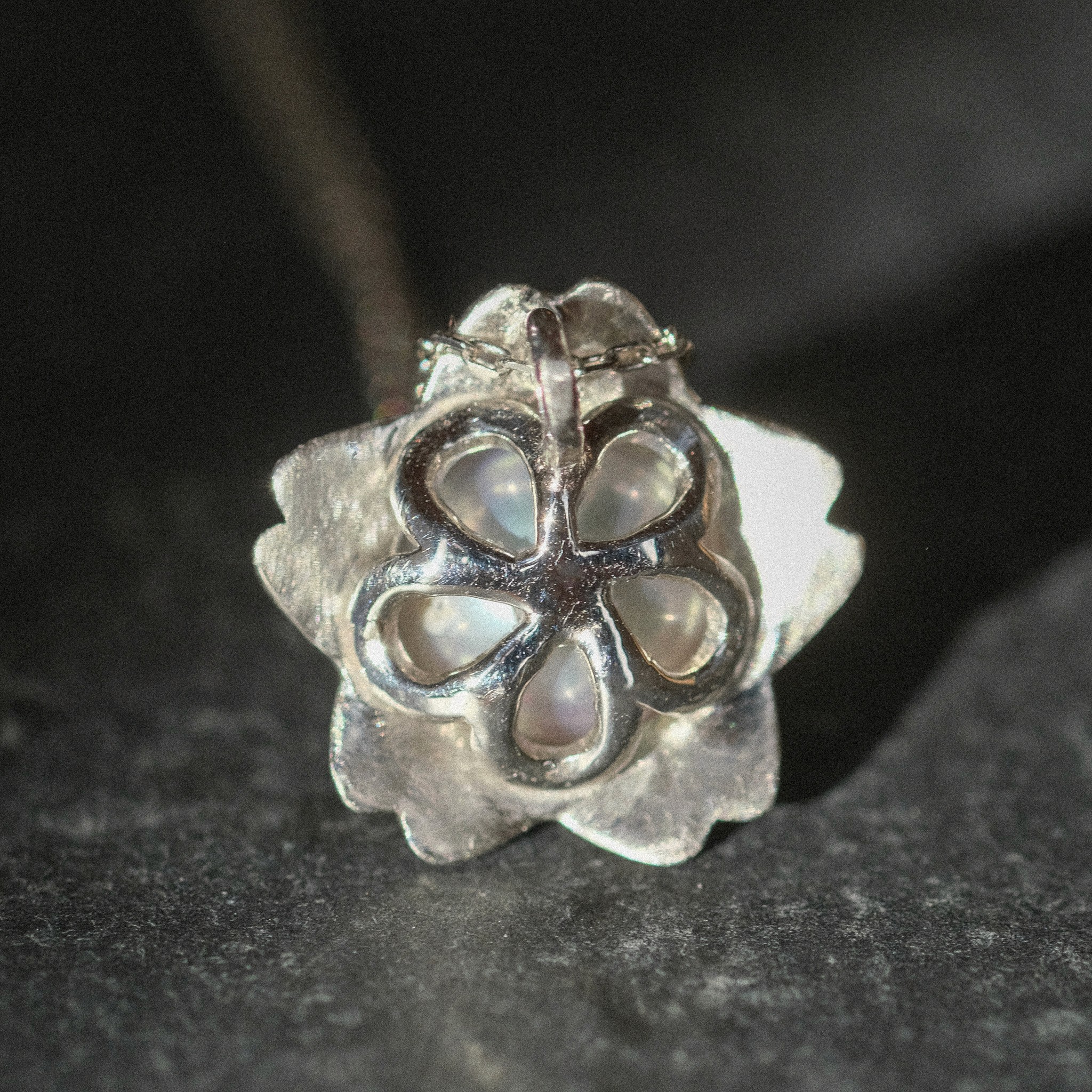
I spent the start of 2026 in the mountains of Japan, a landscape of frozen farmland and slow walks along the river. With long stretches of days at the bench, I finally finished two floral pendants I began back in autumn: a platinum sakura set with a single Akoya pearl, and a sculpted gold flower.
These pieces demanded not just cumulative hours of labor, but months of distance between the first spark of an idea and its final form.
The platinum sakura, in particular, tested my resolve. Platinum is a paradoxical metal; it is incredibly durable and forgiving to wear, yet notoriously tough to finish. It resists polish, requiring a series of repetitive passes with a light hand rather than force.
In Japan, this relationship with material is captured in the concept of Shokunin Kishitsu, the craftsman’s spirit. It is a philosophy of total devotion and a lifelong pursuit of mastery where the artisan accepts that the material has its own will. Platinum doesn’t care about my deadlines and cranking out a dozen quick pendants doesn’t guarantee each will be better than the last.This spirit isn’t unique to the jewelry bench; I see it often in Japan, from the way a chef prepares a single piece of sashimi to the way a neighbor cleans their portion of the sidewalk.
Completing these pieces and even feeling a bit of frustration in how long they took made something click. Craft asks for a perspective that stands in total opposition to the worlds of finance and tech I come from.
For a long time, optimization shaped how I moved through work. Ideas were meant to be tested quickly, validated or discarded just as fast.
I carried that mindset to the bench without realizing it. In the beginning, I measured my skill by how much I finished rather than how much I understood. I mistook movement for momentum.
When you are learning to make something with your hands, optimization often works against you. Mastery doesn’t come through acceleration, but through repetition. Through returning to the same form again and again with slightly better eyes.
I recently read an essay that resonated with me about the importance of craft in the 21st century. An excerpt reads:
“If we wish to contribute to humanity through our vocation, we need to be willing to slow down, revise, and re-attempt… What we are making is also making us. Mastering one’s craft is to master one’s own nature.”
In my life in finance and tech, we optimized to remove the “friction” of human error. But in craft, friction is where the spirit enters. The Shokunin ethos doesn’t look for the fastest path; it looks for the path that honors the material and the best work the maker can create today.
Shifting from a mindset of efficiency to a mindset of reverence is the most difficult tool I’ve had to learn to use.
This shift in mindset was most evident when I turned to the gold flower. I carved many wax iterations before landing on this version, and I find myself wanting to carve many more to create a full metal bouquet. I finished the interior of the petals with a soft, matte texture to catch the light, contrasting it with a mirror polish on the exterior. On the petals, I chose not to refine too far and left some irregularities. Knowing when to leave a piece alone is also important.
Letting go of optimization is still challenging for me. But there is a profound freedom in accepting that in craft, there is no finish line. So at the start of 2026, I am at the bench making practice versions of future pieces and letting time do part of the work.